About this project
This site is for anyone who wants to grow their own vegetables and produce at home, cheaply, and back it up with data: vegetables, herbs, chillies and houseplants raised in a grow tent under LED lights, in an apartment rather than a greenhouse. Every guide is written to be followed, with real pH and EC figures, light distances, temperature and humidity targets, and what actually happened as a result.
Why it exists
Most indoor-growing advice online is either vague ("water when the soil feels dry") or copied from a nutrient manufacturer's feed chart. Very little of it shows measurements, and almost none of it admits when something failed. This project is an attempt to write it down properly: one variable at a time, with the numbers included, and without needing an expensive setup to get there.
The approach: measure, don't guess
The angle here is instrumentation. The tent is monitored with real sensors: temperature, humidity, VPD, soil moisture and CO2, logged through a home automation system rather than eyeballed. That makes it possible to say what a change actually did, instead of guessing. If a claim on this site has a number attached, it came from a reading.
A recurring part of the site is running small experiments on light, humidity and temperature and comparing the data and results side by side, along with ongoing tests of different growing techniques and substrates. Nothing here is presented as the one true method; it's a log of what was tried, what the numbers said, and what changed as a result.
How these guides are made
Every article follows the same rule: nothing is presented as tested unless it was actually tested here. Where a method has been run in this tent, the real settings and outcomes are given, including the failures — heat waves, humidity spikes, pests and all. Where something is standard published practice rather than first-hand experience, it is described as such. Drafts are structured with the help of AI tooling, but the measurements, results and recommendations come from real growing. That part can't be automated, and isn't.
If a guide here is wrong, it gets corrected. Reader corrections are genuinely welcome.
The setup
Growing here is built around small, fast-growing edible plants: arugula, parsley, mint, basil, chillies, paprika peppers, tomatoes, and similar candidates like radishes, lettuce, spinach, cilantro, chives, thyme and oregano. Everything below is what's actually running in the tent right now — no wishlist items, nothing untested.
No specific tent or cabinet model is recommended: grow space varies too much from one reader to the next, so the point of each guide is to give numbers you can apply to whatever size you're actually working with. The current setup runs in a 50x60x120 cm IKEA cabinet, with LED grow light, inline extraction, a dehumidifier and air conditioning for summer, growing in both soil and coco coir in fabric pots. If an older article mentions a different size, that was the cabinet in use at the time.
IKEA wardrobe, 50x60x120 cm, with LED grow light, inline fan, and humidity and temperature sensor (DHT22) mounted in a ESP32. Grows in fabric pots in soil and coco coir.
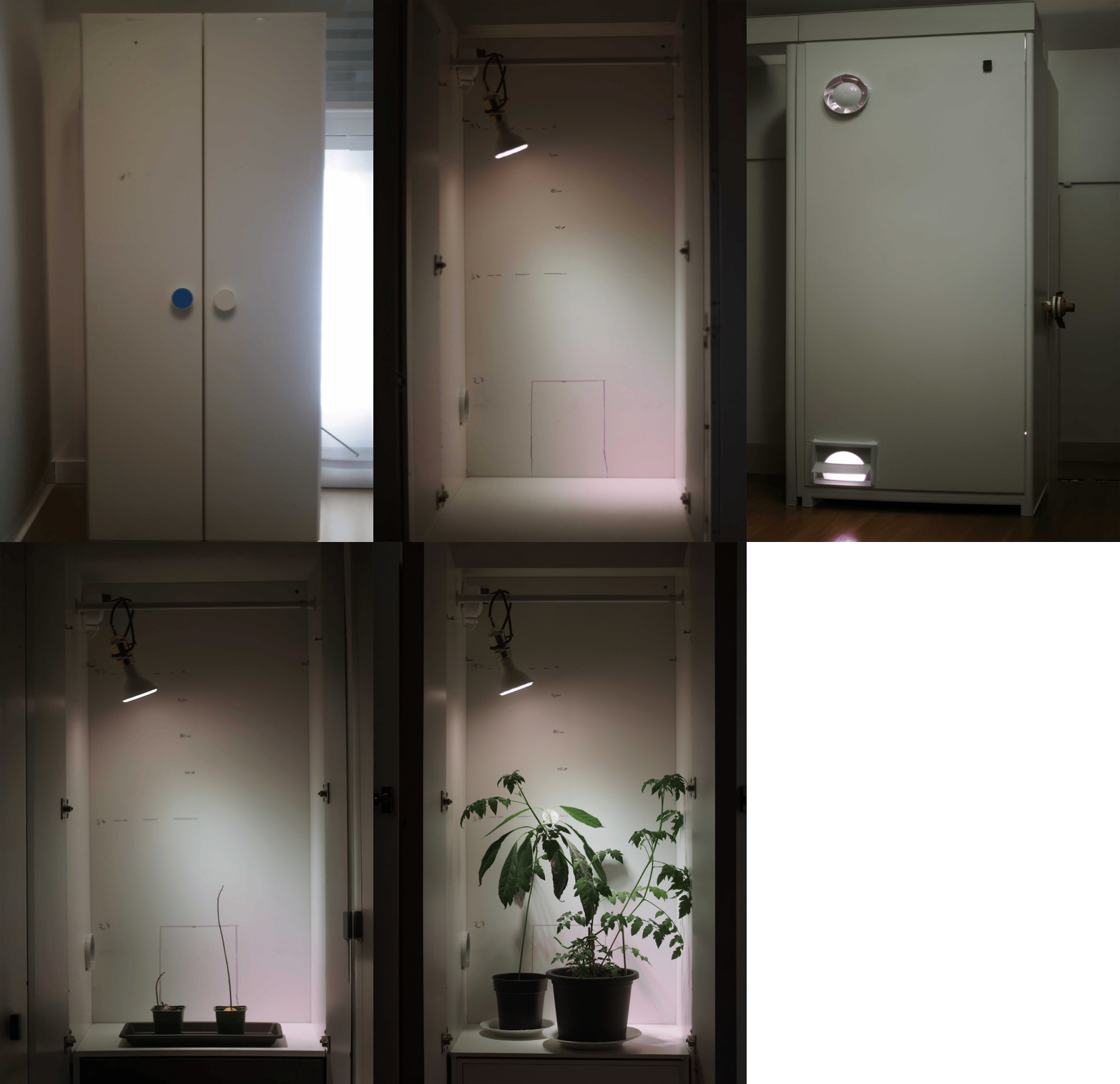
Cost to build this from scratch: split into three tiers — easy (cheap basics, no compromise needed),mid (a step up in investment), andcontrol (the gear that buys real environmental control). Prices are Amazon Spain, 2026.
- Easy — 57,98€: grow lights, soil, fabric pots.
- Mid — 45,77€: liquid feed, PPFD light meter, clip fan, inline fan.
- Control — 419,96€: pH pen and EC/TDS meter, coco coir, heat mat, dehumidifier, AC unit.
Running total: ~524€, before automation and sensors are priced in. Full item-by-item list with buy links below.
Lights
Substrate & pots
- Compo Sana (soil)
- Nitrogen + Perlite Mix (soil)
- Coco coir
- Worm humus (humus de lombriz)
- Fertilizante Líquido Guano NPK 6-4-5
- 7 L and 11 L fabric pots
Environment control
Automation & sensors
- Raspberry Pi (runs Home Assistant)
- Smart plugs
- ESP32 board
- DHT22 temperature/humidity sensor
- Capacitive soil moisture sensor
- MH-Z19B CO2 sensor
Tools & instruments
Gear & affiliate disclosure
Some links on this site, including the ones above, go to Amazon, and a purchase made through one may earn this site a small commission at no extra cost to you. Nothing here is listed because it pays a commission; it's listed because it's actually in the tent, and untested gear is labelled as untested. Full disclosure in theprivacy policy.
Contact
Questions, corrections, or a growing problem you can't diagnose? Emailtali@lajabru.com.